October 21, 2026 | Trumportunity — Close of the Age
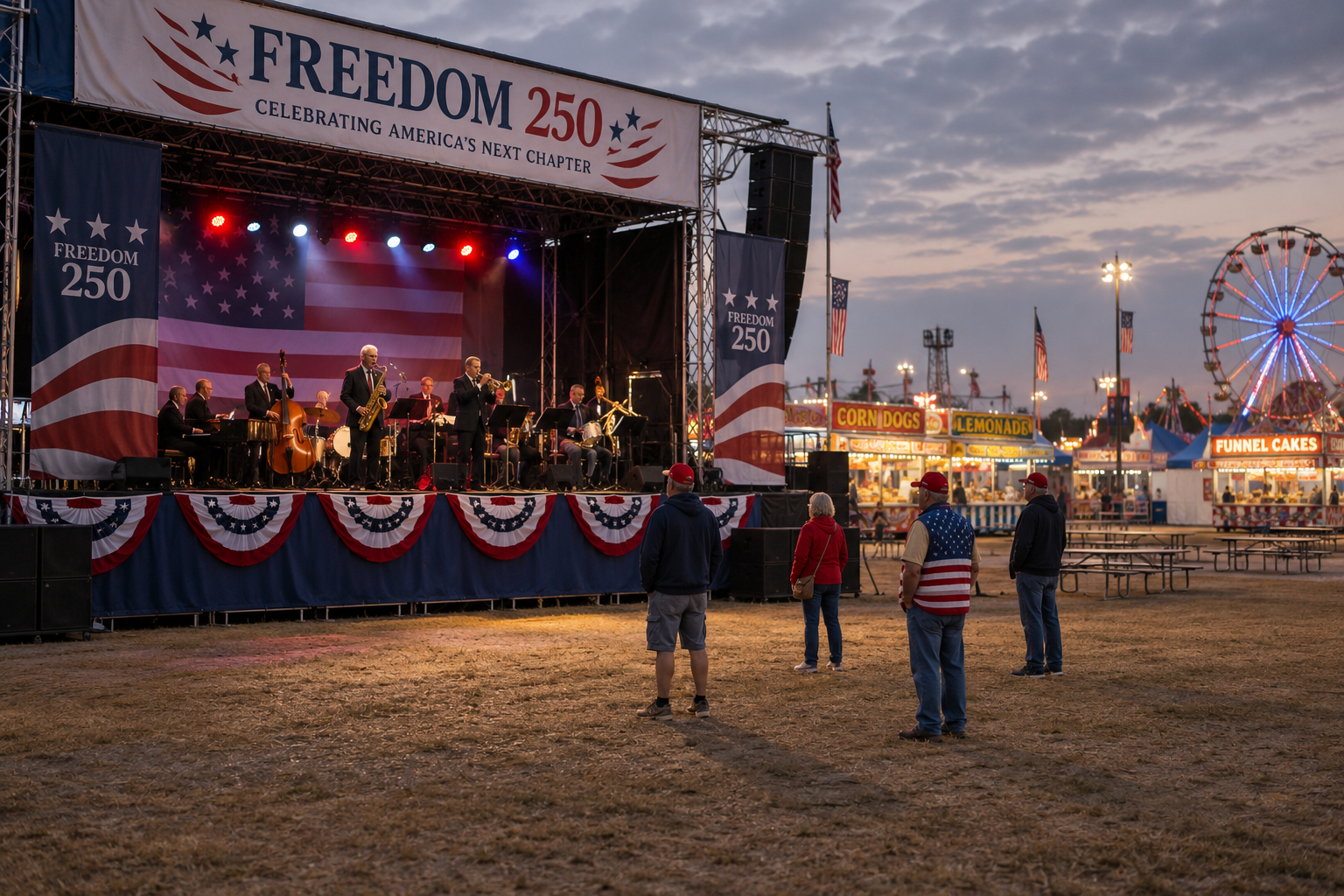
Freedom 250 was a central subject of my investigative report, The Trump Extraction: An Investigative Triptych, published September 11, 2026.
My research documented how the Trump administration established a parallel celebration initiative alongside the congressionally authorized America250 effort, redirected federal resources toward Freedom 250, and accelerated contracting and administrative approvals while the National Park Service faced substantial staffing and project backlogs, due to Trump and DOGE firings and buyouts.
Among the findings were a $150 million federal allocation divided between America250 ($50 million) and Freedom 250 ($100 million), the National Park Foundation’s involvement in managing public resources, and millions in federal contracts connected to the celebrations. There was an additional $150 million allocated for the Freedom 250; buried with the other pork and gravy in the One Big, Beautiful Bill. Where is that second $150 million today? How was it dispersed? At the time of this posting, the requisite paperwork is not in order.
The central question was not simply how much the festivities cost. It was how public authority, taxpayer resources, private organizations, and federal contracting became interconnected.
Now, newly released records raise another question: Where did the private money go?
July 2026: Allegations of Donor Deception and Potential Wire Fraud
On July 2, Democrats on the House Natural Resources Committee released findings alleging that donors intending to contribute to America250 were instead directed to Freedom 250.
According to the congressional investigation, which drew upon whistleblower interviews and documents, prospective donors were allegedly provided banking and routing information for Freedom 250 rather than the congressionally authorized initiative they intended to support.
The allegations raise a potentially serious question under federal criminal law.
Under 18 U.S.C. § 1343, federal wire fraud generally involves a scheme to obtain money or property through material deception, intentional fraud, and the use of interstate electronic communications to advance that scheme.
Simply encouraging donors to support Freedom 250 instead of America250 would not, by itself, constitute wire fraud.
However, knowingly misleading donors about the identity of the recipient, and using electronic communications or wire transfers to obtain their money through that deception, could potentially satisfy the elements of the offense.
The distinction is critical.
If donors believed they were contributing to America250 but were deliberately induced to send money to Freedom 250 through false representations, the transaction could involve more than political fundraising. It could constitute federal wire fraud.
Freedom 250 has denied the allegations. No criminal violation is established by the congressional report, and determining whether fraud occurred requires examination of the actual communications, donor intentions, financial transfers, and evidence of fraudulent intent.
Nevertheless, the allegations introduce a significant new dimension to the financial relationships examined in The Trump Extraction.
September 2026: Congress Demands an Accounting
On September 14, Senators Adam Schiff, Elizabeth Warren, Alex Padilla, and Richard Blumenthal demanded disclosure of Freedom 250’s corporate donations, expenditures, and potential conflicts of interest.
Their inquiry followed reports that Freedom 250 had received more than $50 million from over 20 corporate sponsors, including companies with substantial interests before the federal government.
The senators sought identification of donors, contribution amounts, expenditure records, remaining assets, and information concerning possible preferential treatment.
The financial relationships warrant scrutiny, although corporate donations and government contracts do not, by themselves, establish improper influence.
October 2026: The Financial Picture Becomes More Complicated
On October 8, Public Employees for Environmental Responsibility (PEER) released documents obtained through the Freedom of Information Act.
A National Park Foundation budget estimate identified:
- $128.5 million in estimated costs for major Freedom 250 events.
- $114.2 million in anticipated federal funding.
- Approximately $14.3 million in additional funding needed.
Meanwhile, Freedom 250 reportedly raised more than $50 million in private contributions.
The newly disclosed budget does not clearly account for how those private contributions were allocated.
That does not establish that funds were stolen, diverted, or improperly spent. Nor do budget estimates constitute an audit of final expenditures.
But the records leave a substantial unanswered question about the relationship between private fundraising and public expenditures.
If taxpayers were expected to finance most of the major celebrations, how was the privately raised money actually used?
Another Finding: Competition Was Waived
The newly released records also reveal that the National Park Foundation sought permission to bypass competitive procurement procedures.
Its justification cited immovable deadlines, production requirements, and White House requests involving particular contractors.
The National Park Service approved the waiver in December 2025.
This development is especially significant in light of the original Triptych investigation, which documented unusually compressed approval timelines and the concentration of administrative authority surrounding Freedom 250.
The recurring question is whether urgency became a means of reducing ordinary opportunities for scrutiny.
An Open Investigation
Taken together, these developments present three interconnected areas of investigation:
- Donor deception: Were contributions intended for America250 deliberately redirected through misleading representations, potentially constituting wire fraud?
- Financial accountability: How were Freedom 250’s private donations allocated, particularly when federal funding was expected to cover most major event costs?
- Contracting and executive authority: Who selected the contractors, who authorized exceptions to competitive procurement, and what opportunities for independent oversight existed?
The answers require documentary evidence, not assumptions about criminal intent or wrongdoing.
This post establishes a continuing public discussion of Freedom 250 and its financial and administrative consequences.
Future developments, newly released documents, congressional inquiries, contract records, and independently verified findings will be examined in the comments below.
Who provided the private money? Who received the public money? Who authorized the expenditures? Were donors misled? And can every dollar be accounted for?
The original investigation is available free:
The Trump Extraction: An Investigative Triptych
Sources and Continuing Documentation
- Associated Press — July 2, 2026: Democrats Accuse Trump-Linked Fundraisers of Fraud Over Diverted Donations
- The Washington Post — July 2, 2026: Donors Were Misled by Trump-Backed Freedom 250, House Democrats Allege
- Senator Adam Schiff — September 14, 2026: Congressional Demand for Freedom 250 Financial Disclosure
- PEER — October 8, 2026: New Documents Raise Serious Questions About Freedom 250 Contracting and Use of Taxpayer Funds
- 18 U.S.C. § 1343 — Federal Wire Fraud Statute
This is an ongoing documentary investigation. Findings will be updated as evidence becomes available.
Leave a Reply